Our game design class followed the foundation game design education conventions, using paper prototyping and play testing in the creation of games. The practice of game design typically starts in ‘analog mode,’ for if we can design a good game on paper, it will be able to transition to a digital game. Game designers, like architects, screenwriters, and other creative leaders, all plan the structural elements of a system. Games, however, are interesting precisely because they are systems that in themselves have “play,” and are set in motion by players. This aspect makes game design highly complex and at the same time, highly rewarding. Good game design is valuable not just to create meaningful and compelling player experiences, but forms a set of skills that ultimately can serve other disciplinary endeavors. Games are subtle yet powerful methods of enculturation by which social values, interaction styles, and everyday activities are explored and practiced. Below are a few of the games I’ve worked on (each aiming to emphasize a different message)
Phase Chain | Squito | CrossLit | S.O.S. | I Vow | Trig! | Tip of the Iceberrrrgg
Phase Chain
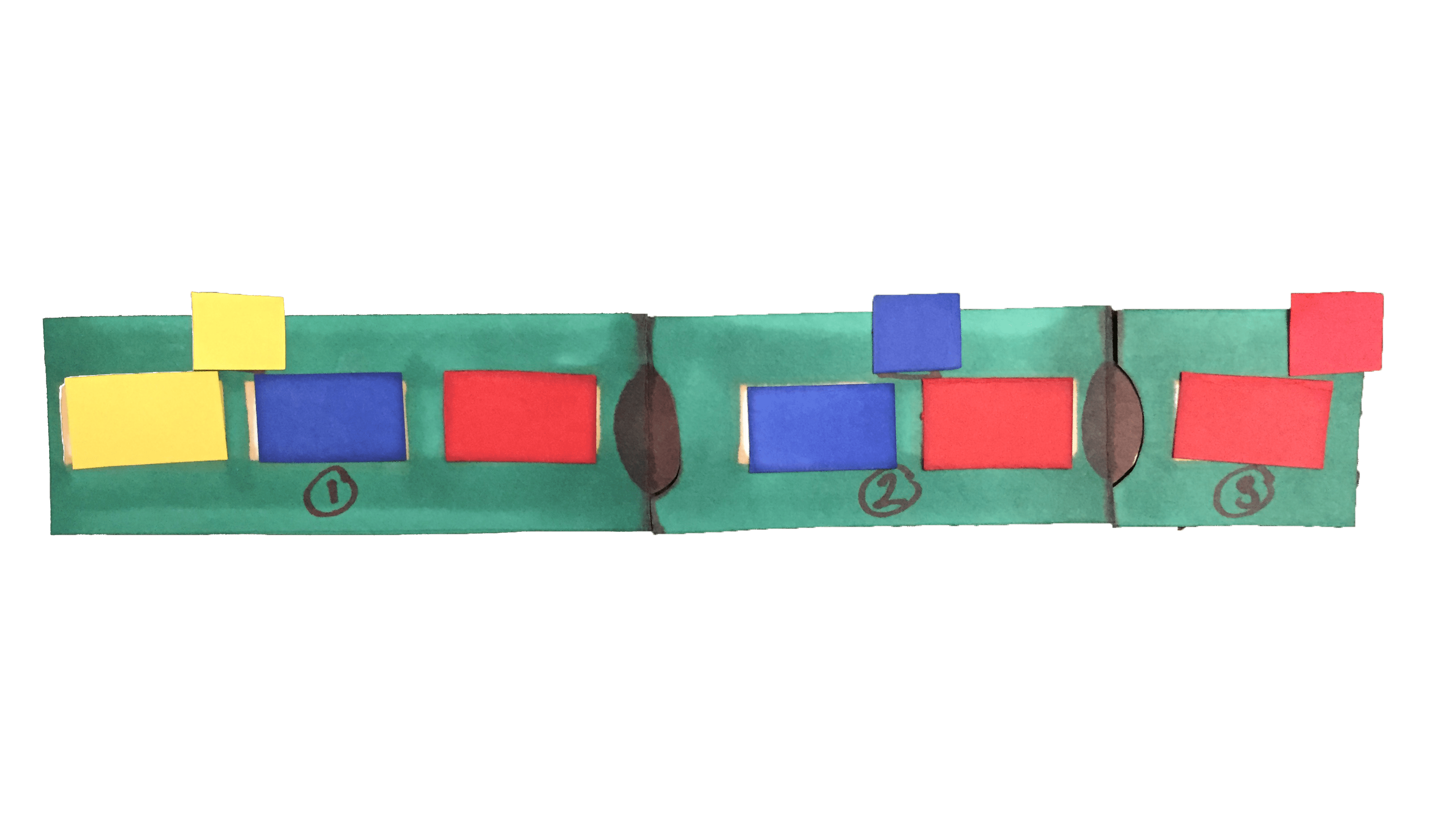
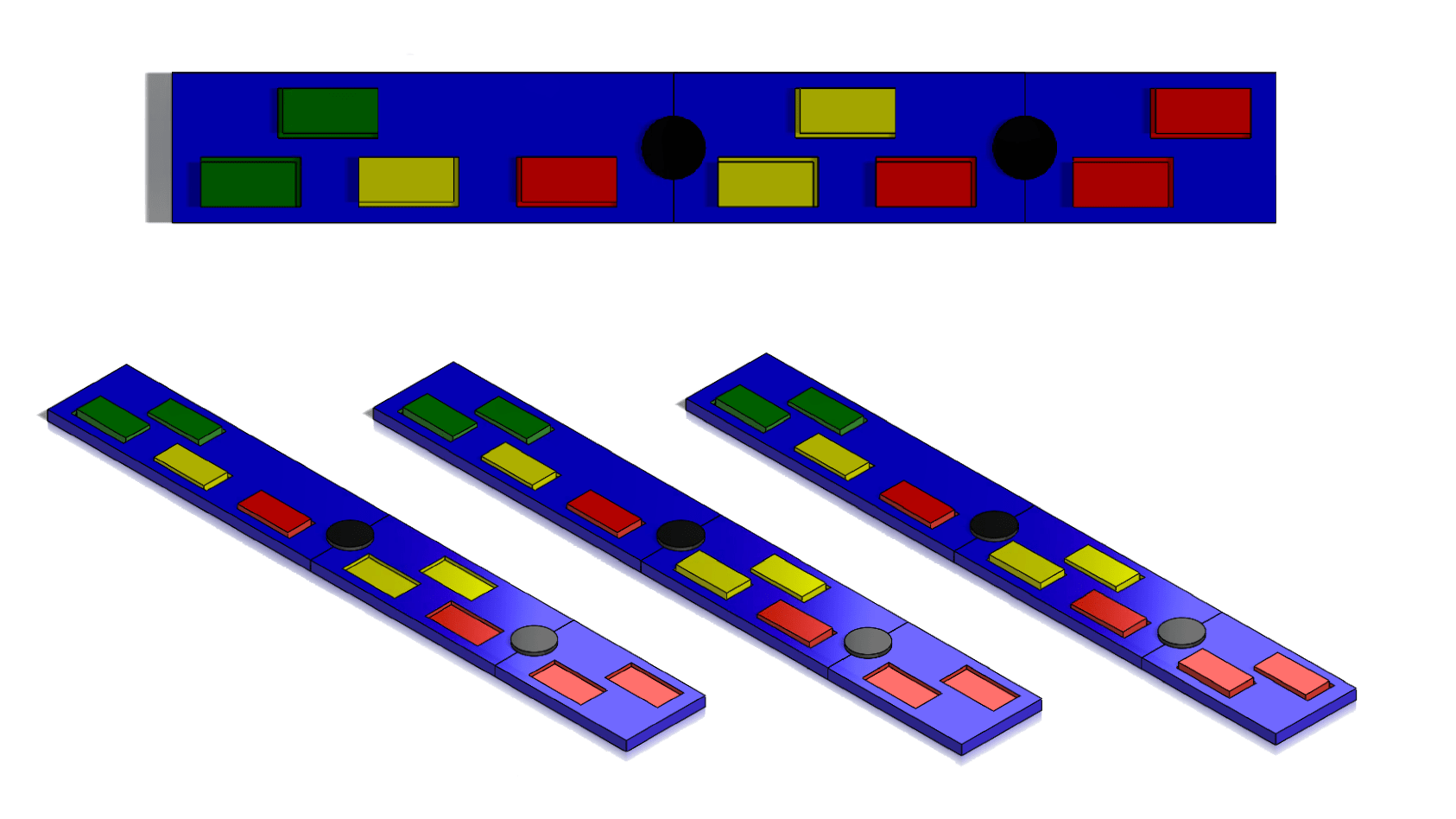
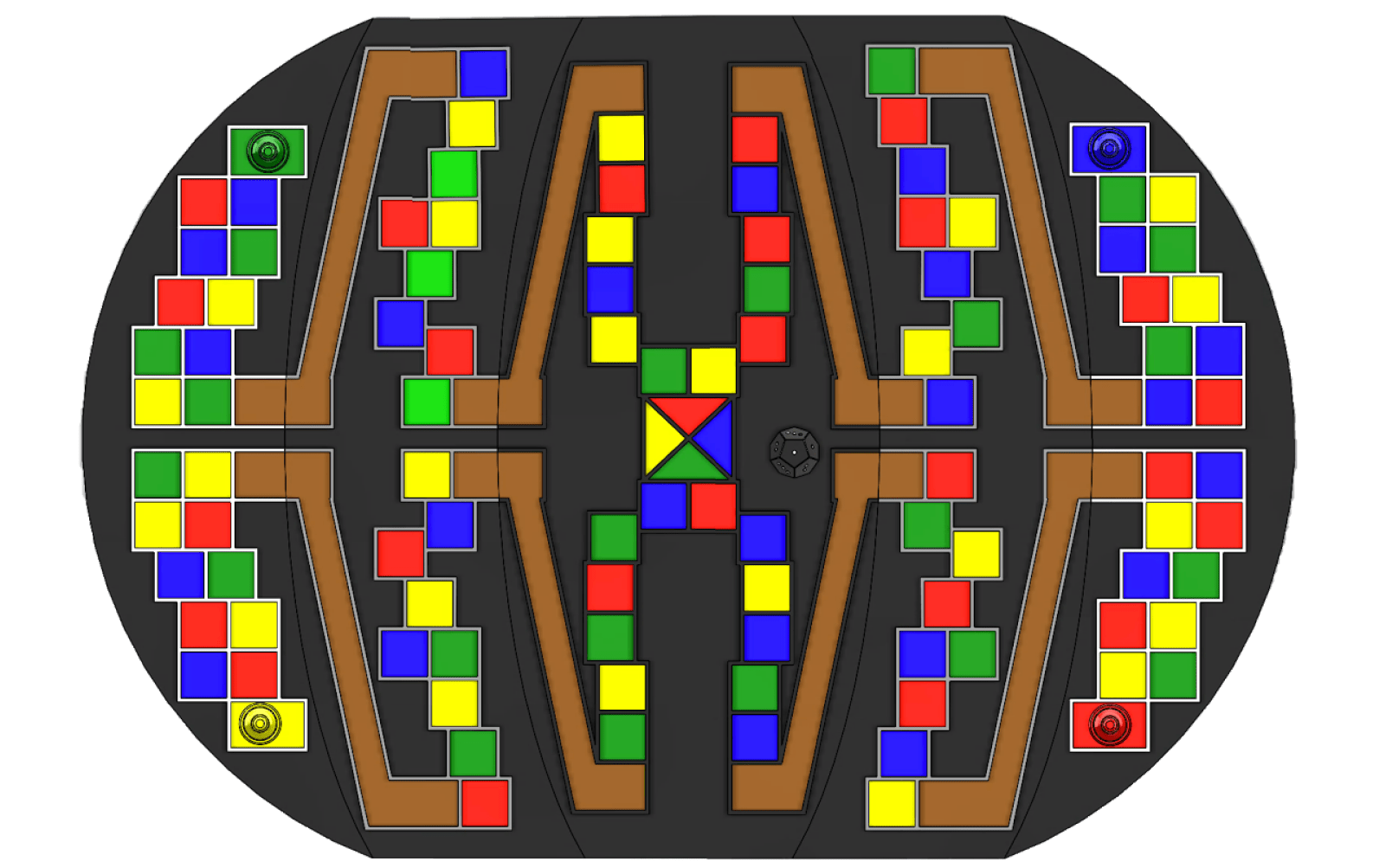
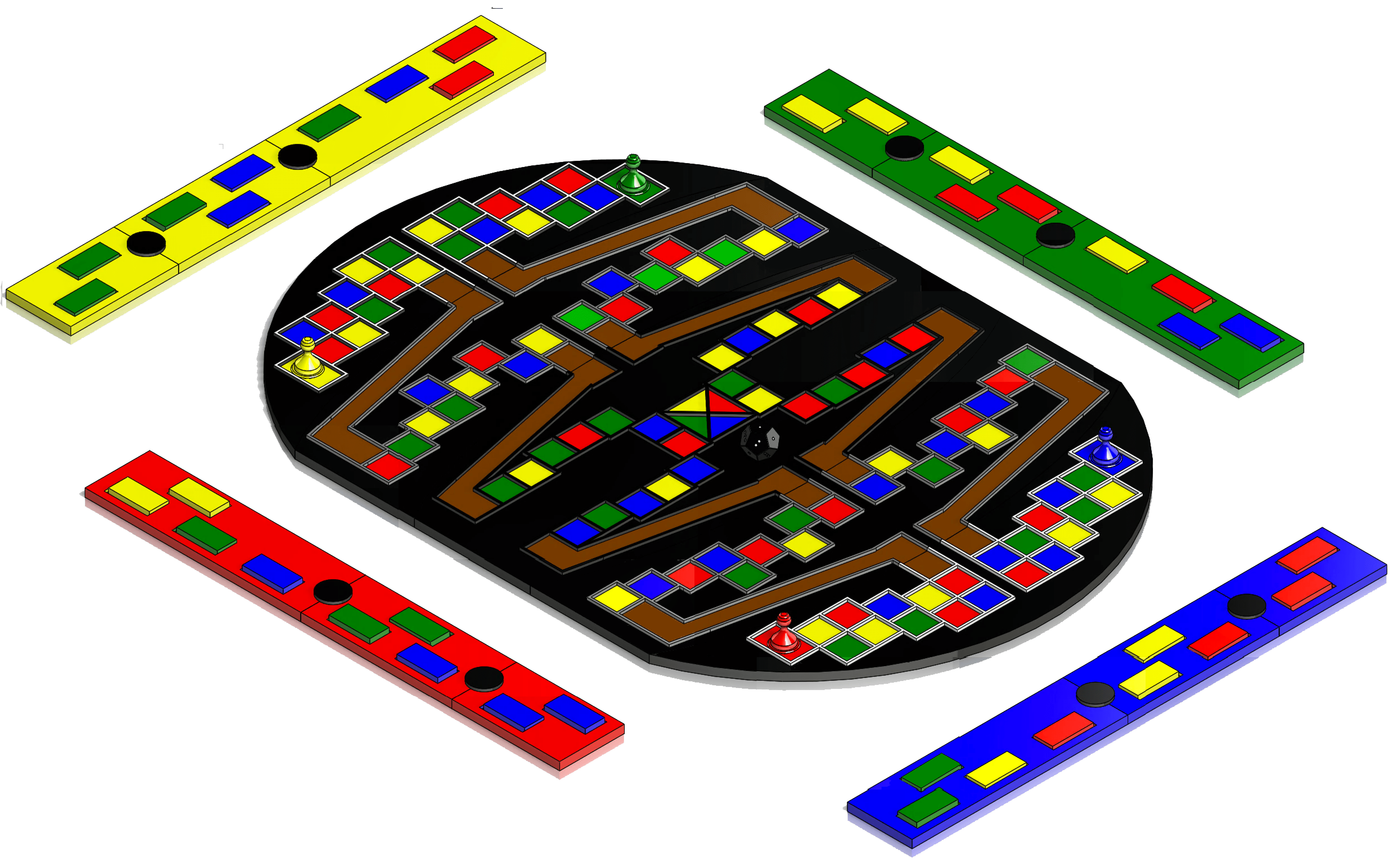
I’m most proud of this game. However, as I’m still pursuing copyrights and publication (regarding the hidden message of the game) I’m unable to discuss it in detail. As a term long project, Phase Chain aimed to fit a need in learning by hiding the message in the mechanics of the game itself post thorough ethnographic studies. Tons of rapid prototyping occurred along with the drafting of all game pieces in Solid Works to later be 3-D printed.
Squito – Zika Virus Prevention
Squito is a dynamic card game designed to educate potential travellers to Zika infested areas about preventive measures they can take to ensure protection from the Zika virus. When researching the Zika virus, the main advice advocated by the Center for Disease Control was surprisingly simple: don’t get bitten by mosquitoes. The card game, therefore, encourages players to identify, collect, and recall preventive measures such as bug spray, long sleeve shirts, bed nets, and air conditioning units in order to give players actionable strategies outside of gameplay to combat the Zika virus. Players take turns drawing and trading cards in simultaneous play in an attempt to obtain as many points as possible through different combinations of preventive measures while trying to avoid mosquitos and the Zika virus itself. Each card features clear graphics, which, we hoped, would be universally playable, regardless of potential language barriers. Also, as a card game, it is easily transportable for travelling. According to one playtester, “It’s ‘Go Fish’ for grown-ups, but you have to think strategically.” We hope you enjoy it as much as we do!
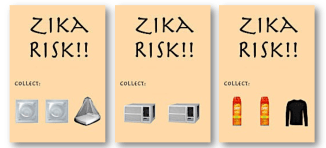
A few cards from the Squito deck
CrossLit – Sport for Literacy
CrossLit is an interactive sport game for literacy that makes spelling fun! By having a dynamic playing field with limitless letter combinations CrossLit entertains children, teens, and adults of all ages. The “board” is created by drawing a 5×5 grid on the ground then filling the spaces in with letters, so all you need to play is a writing utensil (chalk). Players hop from letter to letter creating common, whacky, or advanced words while exercising and expanding their vocabulary at the same time. For added fun players can team up to block competitors from using valuable letters or even create their own additions such as letter multipliers! CrossLit will have you laughing, bouncing, and spelling your way across the playing field. A sure-fire way for the whole family to learn, get outdoors to exercise, and have fun! (Below are a few early player testing videos)
S.O.S. (Stranded in Outer Space) – Combat Depression
S.O.S. (Stranded in Outer Space)is a space themed card game which aims to indirectly teach the four pillars of combating depression on college campuses. While using an outer-space themed narrative to make the lesson easier to digest, both teams blue and yellow consist of four characters: an astronaut, a captain, an engineer, and mission control. While each member has their own challenges to cope with, the team possesses a group goal where all players must work together to combat their assigned challenges. While instilling collaboration with competition, each of the resources needed parallels a pillar of combating depression.
-
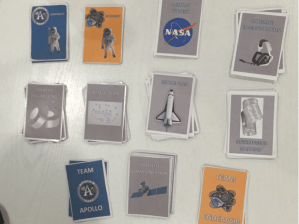
- Deck Prototype
-
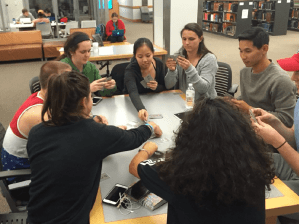
- Play Testing
-

- Team Blue Strategizing
I Vow – Alternate Reality Game Against Bullying
I Vow is an ambitious alternate reality game that combines numerous contemporary social media platforms in an attempt to address the harsh realities of modern bullying in both online and offline lives. This game highlights in a very real way the new reality of bullying in the Internet Age. No longer is bullying relegated to physical spaces where people come together to interact. The advent of new social media platforms allow bullies to take advantage of the various features of these social media platforms to harm their victims. As such, I Vow showcases in exactly those ways bullying takes place in the modern era. However, the game ends with an invitation for players to pledge they will not engage in cyberbullying.
Trig! – Mathematical Literacy
Trig! is a card game designed to act as a trigonometry refresher for incoming college students before they take higher-level math courses. The game utilizes the visual elements of trigonometric functions to help students identify different graphs and then connect them together in a puzzle-like way. Trig! involves both competitive and cooperative game mechanics, which create a balance between excitement and contentment in the gameplay. Overall, Trig! aims to create a comfortable environment for students to build confidence in their trigonometry knowledge and to encourage effort even when confronted with challenges.
-
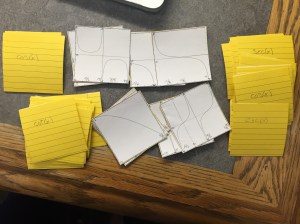
- Prototype
-
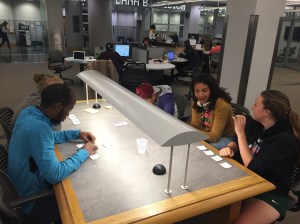
- Play Testing
Tip of the Iceberrrrgg – Address Challenges Facing the Arctic
Tip of the Iceberrrrgg is a game targeted toward a younger generation to help aid climate change by informing them about the positive and negative effects of their actions. A modification of Twister, Tip of the Iceberrrgg incorporates some fun and oddly-large sized action di that dictate how you move various limbs around the “icebergs” as you try to stay “afloat”. The objective is of course to not fall over into the ice cold water surrounding the “icebergs”. The last person to stay afloat wins!
-
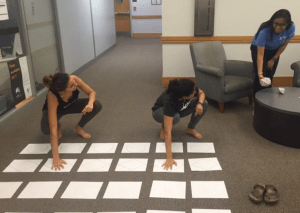
- Play Testing: Game Starting
-
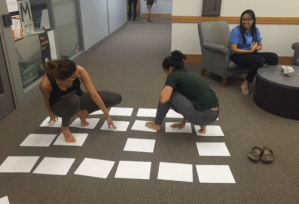
- Play Testing: As Icebergs Melt
 Kendall Ronzano